
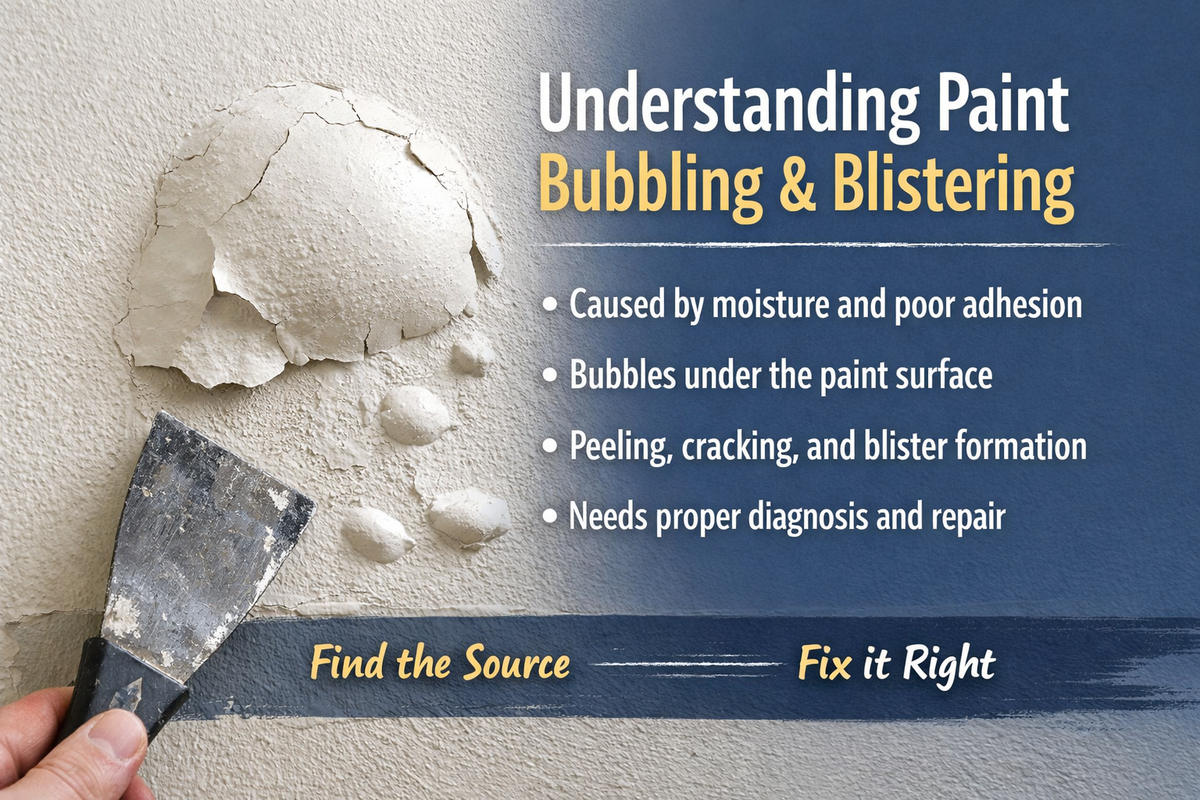
Paint bubbling and blistering are common problems that can appear shortly after painting or months later. These defects not only affect how a room looks but can also signal underlying surface or moisture issues. This FAQ answers the most common homeowner questions about why bubbling happens and how to prevent it from returning.
What is paint bubbling or blistering
Bubbling and blistering occur when pockets of air or moisture form beneath the paint film. These raised areas may feel soft at first and can eventually crack or peel if not addressed.
What causes paint to bubble after application
The most common causes include moisture trapped in the surface, painting over a damp area, applying paint in high humidity, or painting on a hot surface that causes the paint to dry too quickly.
Can poor surface preparation lead to blistering
Yes. Dirt, grease, dust, or glossy surfaces prevent paint from bonding properly. When adhesion is weak, the paint film can lift and form bubbles.
Does moisture behind walls cause paint bubbles
Moisture is a major factor. Leaks, condensation, or high indoor humidity can push moisture through the surface, forcing the paint to lift and blister over time.
Can painting in direct sunlight cause bubbling
Yes. When paint dries too fast in direct sun or on overheated surfaces, solvents can become trapped beneath the surface, leading to bubbling as the paint cures.
Does using the wrong paint contribute to blistering
It can. Paints not designed for the surface or environment may not handle moisture or temperature changes well. Choosing the right product helps reduce this risk.
You can explore suitable paints and primers here:
Shop Paint Collections
Can bubbling paint be fixed without repainting everything
In small areas, damaged paint can be scraped, sanded, primed, and repainted. Widespread bubbling usually means the underlying cause must be fixed before repainting.
How can bubbling be prevented in future paint jobs
Prevention includes allowing surfaces to dry fully, controlling humidity, using proper primers, and following manufacturer guidelines for temperature and drying times.
Is blistering more common in certain rooms
Yes. Bathrooms, kitchens, basements, and exterior walls are more prone due to higher moisture levels and temperature fluctuations.
When should a professional painter be involved
Professional help is recommended when
- Bubbling keeps returning
- Moisture sources are unclear
- Large areas are affected
- Long term durability is a priority
You can request painter support here:
Painter Order Form
Can Randall’s help identify the right solution
Yes. Randall’s specialists can help diagnose bubbling causes and recommend proper prep methods, primers, and paints for your situation. Learn more here:
Randall’s Services
For help resolving paint bubbling or planning a long lasting repaint, contact the Randall’s team here:
Contact Randall’s